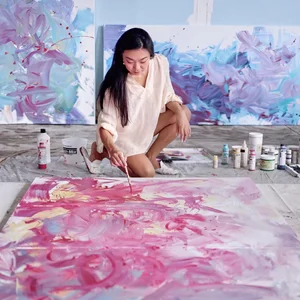
A History Still Being Painted: A Conversation with John Booth at the National Gallery
October 2026, FT Chinese Columnist Fanyu Lin
“We regard ourselves as one of the only museums on earth that can tell the whole story of painting from the beginning…” — John Booth, Chair of the Board of Trustees, the National Gallery, London
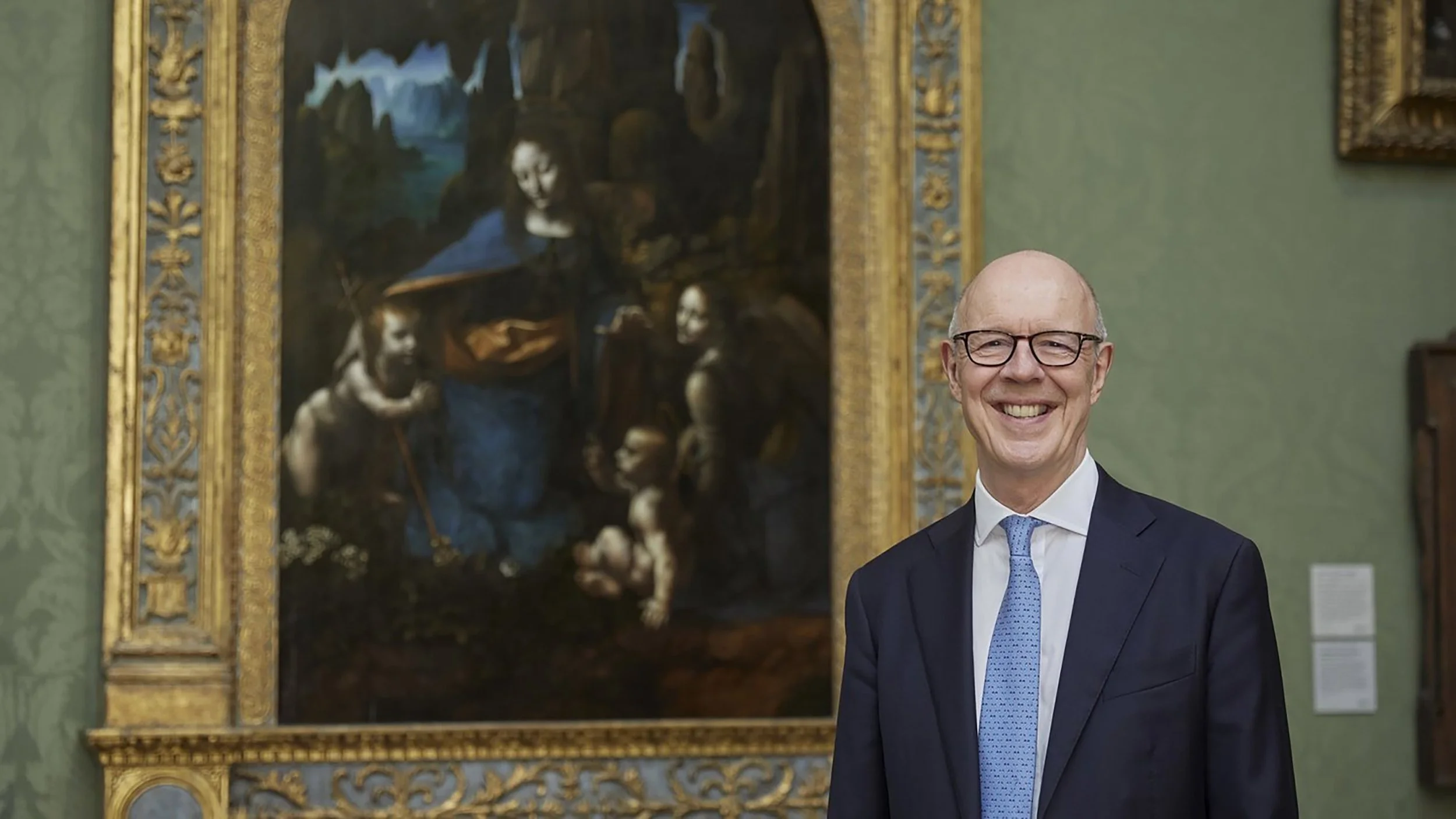
Portrait of John Booth
When the National Gallery opened in London on 10 May 1824, that story began with just 38 paintings. There was no monumental building on Trafalgar Square, no grand staircase, no sequence of rooms through which centuries of European painting could be read as history. The paintings, purchased by Parliament from the heirs of the financier and collector John Julius Angerstein, remained hanging in his former townhouse at 100 Pall Mall.

Van Cliburn performing in the Soviet Union, 1962. Four years earlier, he had won the inaugural International Tchaikovsky Competition, becoming an enduring symbol of cultural exchange during the Cold War.
Britain was already a formidable commercial and maritime power, transformed by industrialization and emerging from the Napoleonic Wars with an expanding global reach, yet it had been comparatively slow to establish a public collection of paintings for the nation. Unlike the Louvre, which had emerged from a royal collection transformed by revolution, the National Gallery began through the state purchase of a private collection: private wealth was converted into public inheritance.
Two centuries later, John Booth is among those entrusted with deciding how that inheritance continues. Appointed by the Prime Minister, he has chaired the National Gallery’s Board of Trustees since 2021. He came to the Gallery after nearly three decades in international financial markets, alongside a longstanding involvement with art that led through Pallant House Gallery and Tate. Working closely with Sir Gabriele Finaldi, the Gallery’s Director since 2015, John has helped steer the institution through its bicentenary and into its next chapter. When we spoke, he returned to the Gallery’s founding purpose. He described that purpose as making great art available “for the enjoyment and education of all.” More recent legislation charges its trustees with acquiring works of “established merit or significance.” Neither of these injunctions, he pointed out, sets an end date on the collection.
That open-ended mandate has become newly consequential. For much of the recent history of the National Gallery, its collection effectively ended at 1900. But as the Gallery entered its third century, John and his fellow trustees returned to a simple fact: painters had not stopped painting in 1900. “We felt it was wrong to interrupt that narrative,” he told me, “that we should continue collecting as long as people continue to make great paintings.”
I. Painting, Still
Those first 38 paintings became a collection of more than 2,400, spanning nearly eight centuries of painting. One of its oldest works, Margarito d’Arezzo’s The Virgin and Child Enthroned, with Narrative Scenes, dates from around 1263–64. Painted in egg tempera on wood, probably for a church, it carries a signature whose surviving Latin inscription declares, in effect: Margarito of Arezzo made me. Margarito was among the earliest painters on the Italian peninsula known to sign his works. More than 750 years later, the declaration feels unexpectedly contemporary: a human being made this.
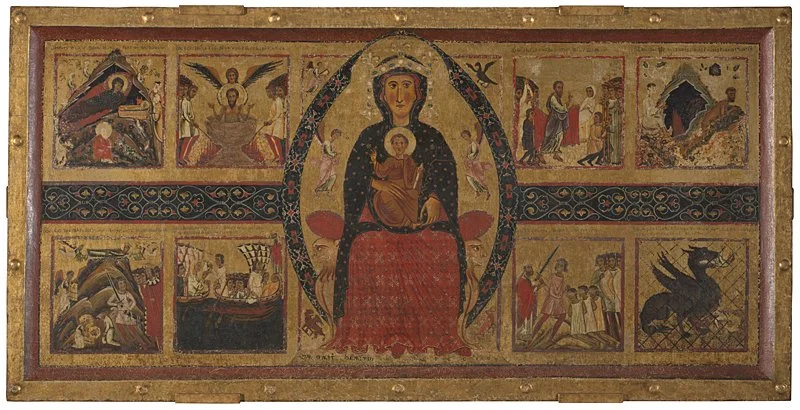
Margarito d’Arezzo, The Virgin and Child Enthroned, with Narrative Scenes, probably about 1263–4 © The National Gallery, London
Between that panel and the paintings of the twentieth and twenty-first centuries, painting continually innovates and expands its range of possibilities: sacred figures acquiring bodily weight; space becoming measurable through perspective; oil paint turning light into skin, glass, fur and reflection; portraiture making an individual face worthy of sustained attention; landscape becoming a subject in itself; Turner confronting steam and industrial modernity; Monet dissolving the solidity of the world into light; Van Gogh allowing paint itself to acquire almost bodily presence; Cézanne rebuilding nature through color and form.
The National Gallery’s collection remains highly selective. By John’s calculation, it has acquired roughly twelve paintings a year across its two centuries, and the Gallery attempts to keep an unusually high proportion visible, whether on the walls in Trafalgar Square or through loans elsewhere. To extend the chronology is therefore to decide which paintings made nearer to our own time can bear the weight of joining a history that already contains Titian, Rembrandt, Velázquez, Turner, Monet and Van Gogh.
That responsibility takes on another dimension in a culture in which importance and price are so easily confused. John offered the example of a recent acquisition, a portrait by the German Modernist Max Pechstein, bought for under $1 million. “The thing about great art is that it isn’t always fashionable art,” he told me. Some twentieth-century artists, he said, are deeply out of fashion; if an artist is significant and a particular painting is among that artist’s best, temporary neglect can make the moment more, rather than less, interesting for a museum to acquire it.
A museum working across centuries has an advantage over the market: it can afford to think in a different unit of time. Fashion is cyclical. Price moves. Reputation rises, disappears and is reconstructed. The painting remains.
I asked John how he imagined the definition of painting changing over the next hundred years, as artificial intelligence and other technologies alter not only how we make things but how we understand human creativity itself. He paused. “I think that great painting will always continue to be a relationship between the painter and the canvas or the wood or whatever material they’re painting on,” he said. Materials will change, as they always have, from tempera and oil to acrylic and whatever may follow. But he expects the Gallery to remain committed to what he called the “purity of painting”: the continuing history of people making paintings.
For Maurice Merleau-Ponty, painting begins in the body that sees. In Eye and Mind, the painter does not stand outside the world and reproduce it; by “lending his body to the world,” he turns vision into painting. Seeing is itself embodied: the person looking is also visible, the hand that touches can itself be touched.
The philosopher Richard Wollheim approached painting from the side of the viewer. To see a painting, in his account, is to experience a peculiar “twofoldness”: we see what the painting gives us to see while remaining conscious of the marked surface through which it appears. Painting never entirely allows the image to escape the thing that made it visible.

Pierre-Auguste Renoir, The Promenade, 1870, in Renoir and Love, National Gallery, London, 3 October 2026–31 January 2027. © J. Paul Getty Museum
The surface also carries the history of its making. A brushstroke may describe a face or dissolve into a field of color; it remains the residue of an action—pressure, movement, hesitation, repetition, revision. Art critic Isabelle Graw has argued that painting derives part of its enduring fascination from precisely this capacity of its physical signs to produce a “fantasy” of liveliness, as though the activity that made the work remains somehow present after its maker has gone.
Edwin A. Abbott’s 1884 novella Flatland offers another way of thinking about that surface. Its inhabitants live in two dimensions and cannot perceive a three-dimensional object in full; they can know it only through the changing cross-section it makes as it passes through their plane. The limitation belongs not to the world, but to the dimensions through which they are able to perceive it.
Painting carries something of the same paradox. Its surface is bounded and resolutely two-dimensional, much as human perception is bounded by the conditions of being human. Yet across that finite plane, painters have continually reached beyond what can be immediately seen or known. A painting is therefore not only an image of the world. It can also be a record of the limits through which we have learned to see it, and of our persistent desire to see beyond them. Seen across centuries, paintings record not only what human beings saw, but something of what it was to see as a human being.
II. Opening the Temple
The first dedicated National Gallery building, designed by William Wilkins, opened on Trafalgar Square in 1838. Parliament had chosen the site in part because it was understood as the center of London, a place appropriate for a collection intended for the nation rather than a private or courtly audience. Its portico, dome and long classical façade gave physical form to a nineteenth-century idea of culture: painting was important enough to require a civic monument. To approach it was to ascend.

The National Gallery on Trafalgar Square, designed by William Wilkins © The National Gallery, London
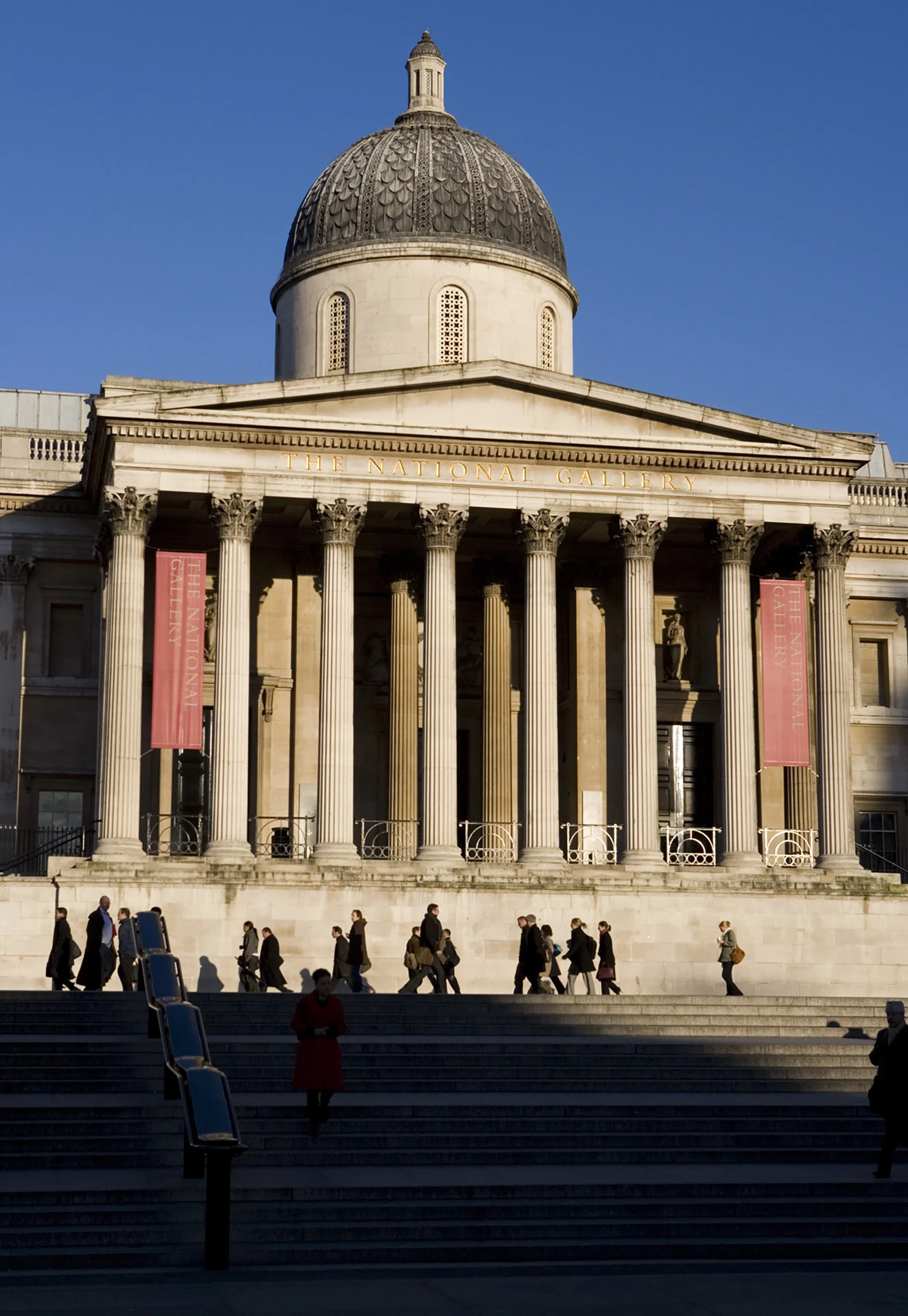
National Gallery © National Gallery, London
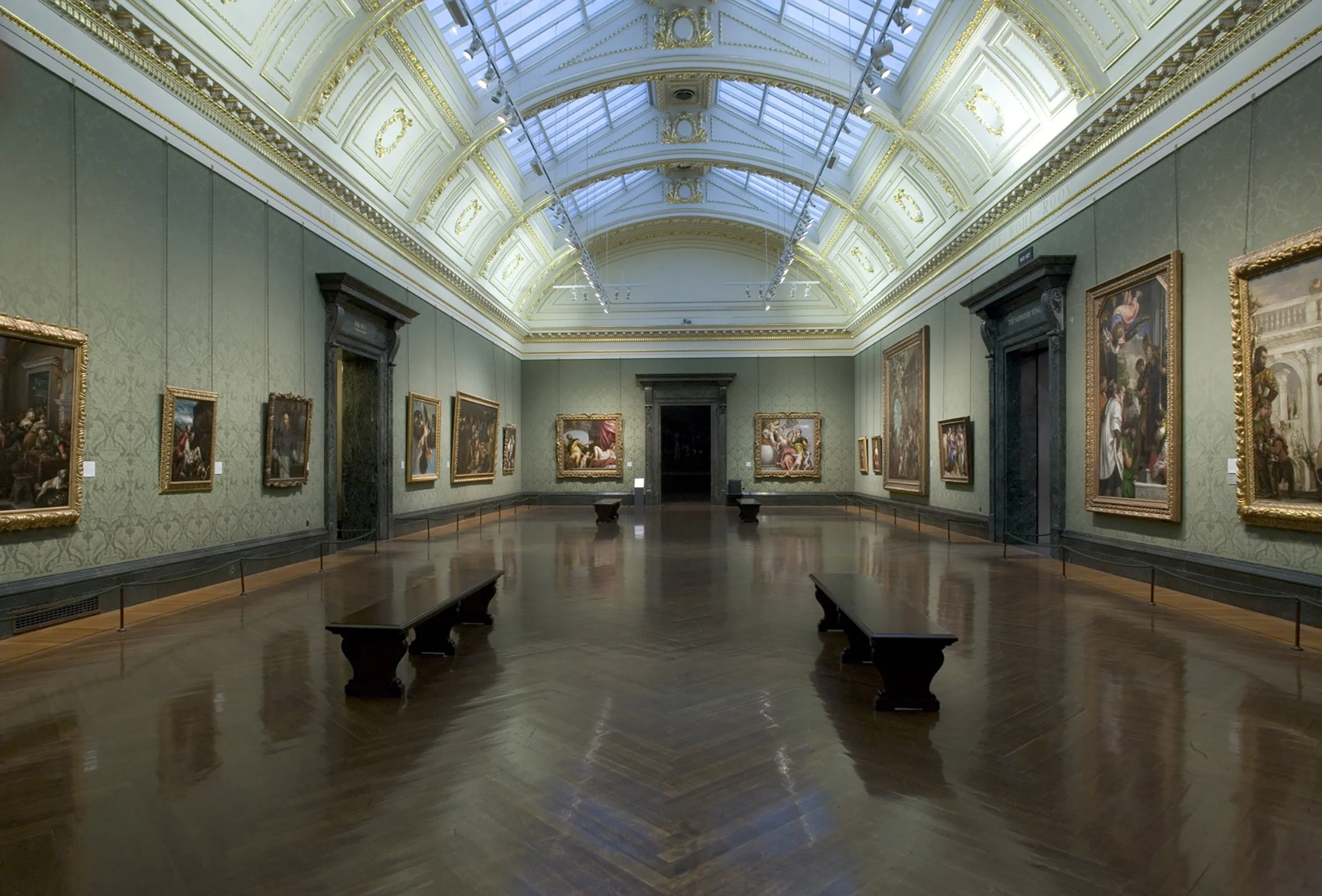
National Gallery © National Gallery, London
John describes the Wilkins building as possessing “the presence of a great cathedral.” It is dignified; it announces seriousness. But the same architectural authority that once made public ownership visible can, to a different generation, create distance. “We discover that the younger generation sometimes finds that a little bit off-putting,” John told me.
That tension between reverence and invitation has followed the institution into each architectural generation. The Sainsbury Wing, designed by Robert Venturi and Denise Scott Brown with Edward Middleton and opened in 1991, approached the historical building not by imitating it but by entering into an architectural argument with it.
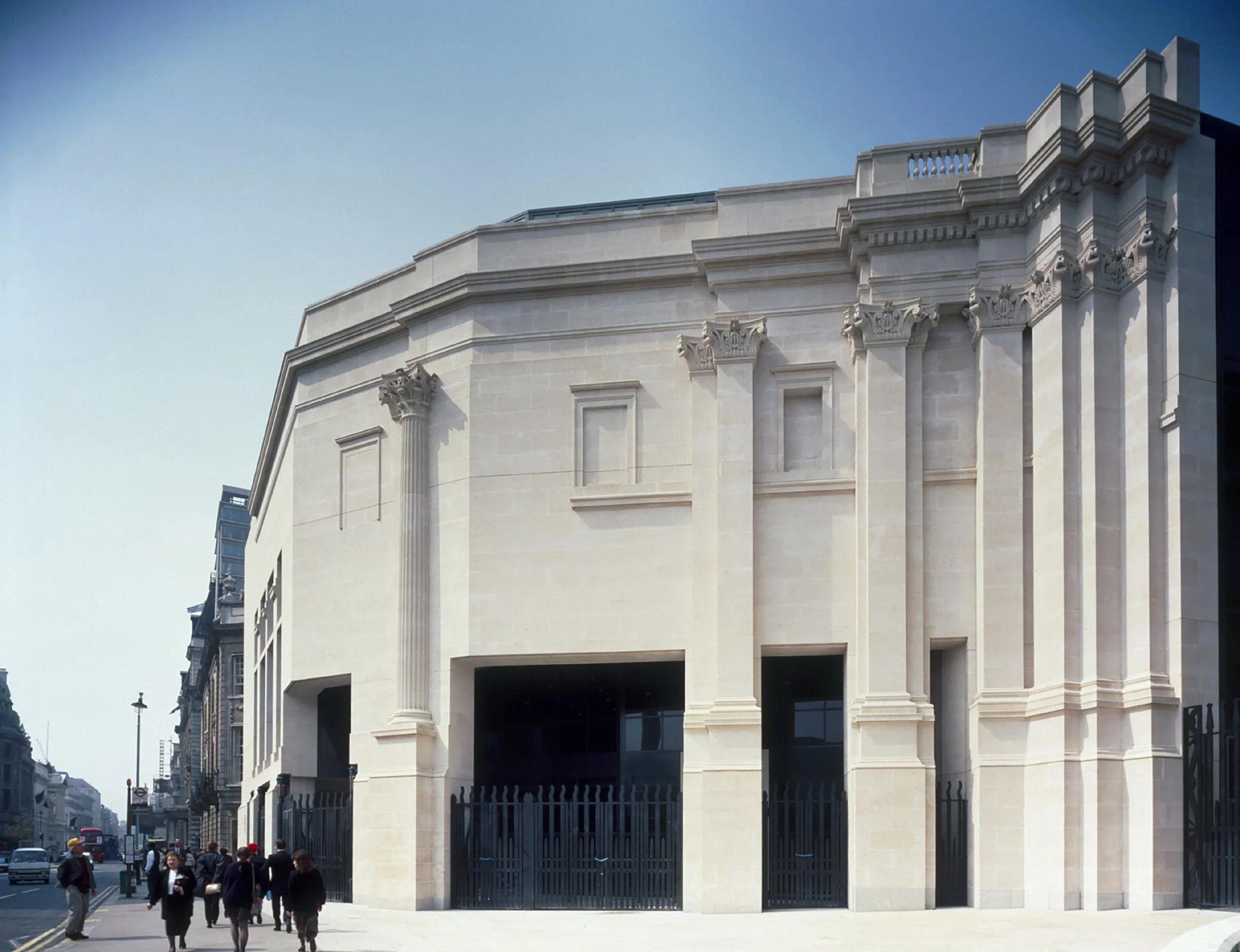
The Sainsbury Wing Exterior © The National Gallery, London
In 2025, a remodeling by Selldorf Architects altered the entrance experience again. Dark glazing has been replaced with clearer glass; the ceiling has been raised; and a large digital screen now shows extraordinary magnifications of details from the collection. John described how it can reveal the minute construction of a Vermeer, the trace of a brush so fine that the physical act of painting becomes newly visible. The screen, paradoxically, uses digital technology not to replace the painting but to lead the viewer back toward it.

The Sainsbury Wing Interior, remodeled by Selldorf Architects, 2025. Photo: Edmund Sumner
Project Domani pushes that invitation further. Kengo Kuma and Associates, with BDP and MICA, won the competition for the new wing, part of the Gallery’s £750 million transformation. John describes the design as modern but in conversation with its predecessors, including through its use of Portland stone. More importantly, it is intended to open a new pedestrian route between Leicester Square and Trafalgar Square. The museum is no longer a destination at the end of an ascent; part of it becomes a passage through the city. He calls the building “a gift to the people of London.”

Artist’s impression of the new Project Domani entrance, designed by Kengo Kuma and Associates with BDP and MICA. Credit: Kin Creatives
Across these architectural moments, a subtle reversal has taken place. In the nineteenth century, the public was invited into a temple of painting. In the twenty-first, the institution is trying to open the temple: to make its threshold transparent, to allow the city to pass through it, and to bring the paintings themselves outward.
That last movement has already begun. For the bicentenary, the Gallery sent 52 paintings to exhibitions in China, South Korea and Taiwan, while twelve masterpieces traveled to twelve museums across the United Kingdom, where John says they were seen by some 750,000 people. “Keeping the collection as visible as possible is really important,” he told me. The gesture returns, in a different form, to the founding premise of 1824: these paintings are not just housed in a public institution; the fact that they are available and accessible to the public is part of their very purpose in the National Collection.
But the bicentenary also brought a more unusual experiment in what being a public institution might mean. The Gallery convened a Citizens’ Assembly, which John described as the first undertaken by a national museum or gallery. Fifty-five people were selected by public lottery to represent a cross-section of the British public and met for five intensive sessions with artists, curators, academics, community leaders and Gallery staff to discuss how the institution might evolve in its third century.
The purpose was to “reconnect the National Gallery with the people who own it, which is the British taxpayer.” The Citizens’ Assembly gave that idea of ownership another dimension: not only access to the collection, but a voice in the institution’s future. John called the assembly “a great listening exercise.” And listening, for him, cannot stop with those who already come. “I think it’s really important to listen to your audience,” he told me, “and more important still, I think, to listen to the people who are not currently your audience.”
There is an architectural question here, but also a democratic one: how does an institution preserve the seriousness of what it holds without turning seriousness into exclusion? The answer cannot simply be to make the museum easier, faster or more entertaining. A great painting may demand precisely the opposite qualities: patience, difficulty, sustained attention.
The temple does not have to disappear. Its doors have to open.
III. The Original
For all our conversation about digital audiences, architecture and the future, John became most animated when he spoke about something very old: the physical power of the original object.
He had recently visited the British Museum to see the Bayeux Tapestry and was struck by the presence of an object approaching a thousand years in age. The National Gallery’s thirteenth-century paintings produce something similar. Visitors, he said, can be “really moved, physically moved, by the power of the object and its history and its presence in the room, in the gallery.” During the brief enthusiasm for NFTs, he went to see the exhibitions. None, he told me, moved him in the way a Rembrandt or a Titian could. His conclusion was deliberately provisional: minds should remain open, “but open yet sometimes skeptical.”
The history of the National Gallery itself offers an unusually literal demonstration of that attachment to originals. During the Second World War, the collection was removed from London for safety and ultimately stored underground in the Manod slate mine in Wales. The empty Gallery did not close. Myra Hess organized celebrated lunchtime concerts there, and from 1942, after members of the public asked to see paintings again, one work at a time returned to London as the Gallery’s “Picture of the Month.” The country was at war, the building was largely emptied of its collection, and still people wanted an encounter with an actual painting.

Titian’s Noli me Tangere on display at the National Gallery during the Second World War. In 1942, it became the first “Picture of the Month,” beginning a tradition that continues today. Print copied from a wartime photo album © The National Gallery, London
The original carries information that cannot be separated from its existence as an object. A painting does not just depict time; it has passed through time. The same surface touched by the painter enters another century, another political order, another room. Cracks, revisions, fingerprints, changes in pigment, the pressure of a brush or the edge of a gesture.
His own relationship with painting began before he had language for it. He remembers being five or six years old when his mother, a schoolteacher, took him to the home of an art teacher. On the wall was an abstract painting in blue and white. Decades later, after he had been collecting for years, he looked at what he had accumulated and realized how many of his paintings were blue abstractions. Only then did the childhood image return. “I suppose it had been in my subconscious for… 20 years,” he said. Once he recognized the connection, something shifted: he found himself able to move away from blue, toward red, from abstraction toward figurative painting. A collector can look, study and reason, he said, but there is also “some little voice inside you” drawing you toward one work rather than another.
John showed me a painting he particularly loves, Varda Caivano’s Untitled from 2005. There is something intimate about the way a painting enters a life. A blue painting encountered at five can remain somewhere beyond conscious memory and reappear decades later as taste. We do not only look at paintings. Sometimes paintings remain in us before we understand what they have done.
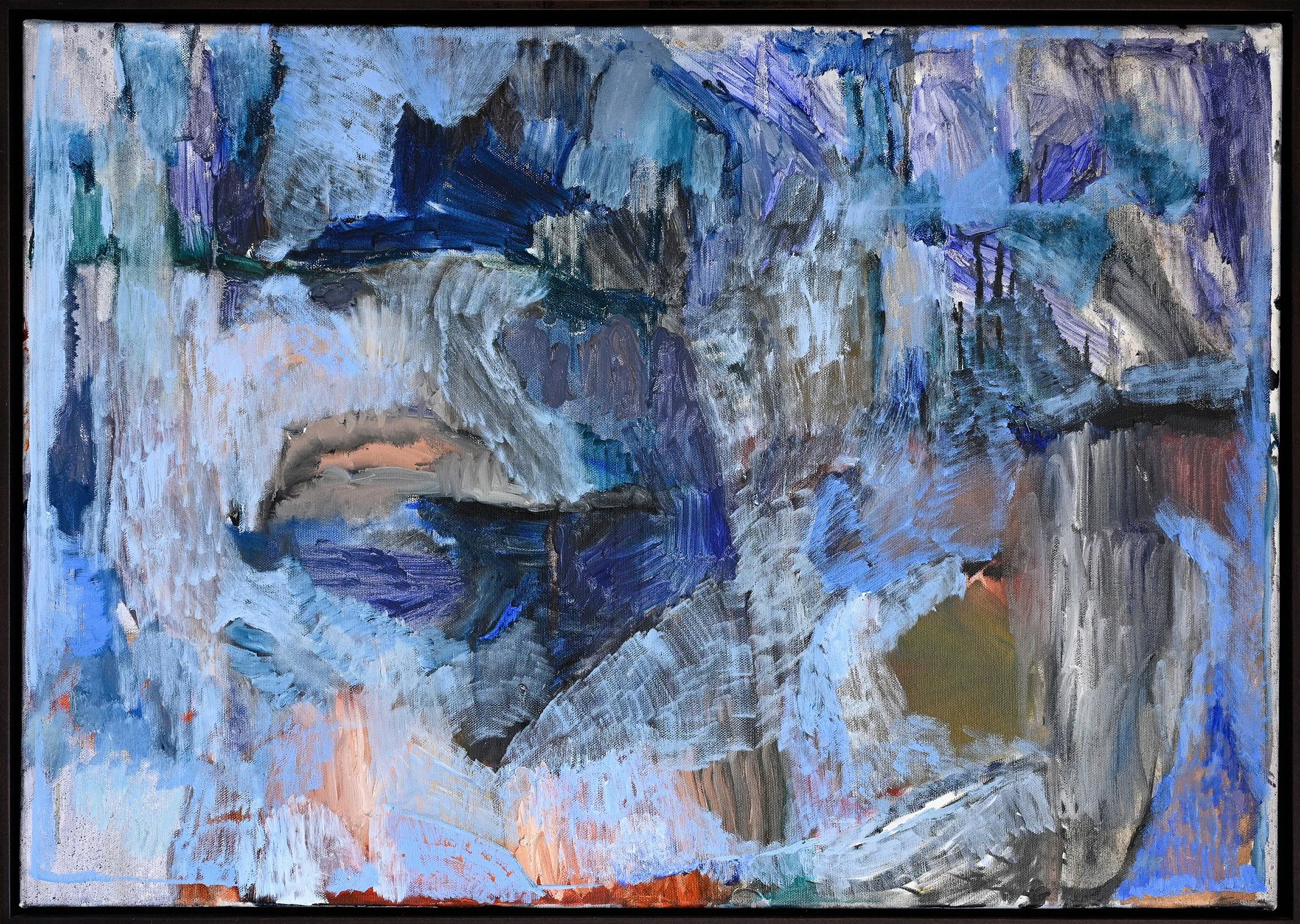
Varda Caivano, Untitled, 2005. Courtesy of John Booth
Seen in this way, extending the National Gallery’s collection is about more than chronology. It acknowledges that the fundamental human experiences to which painting has given form—devotion, desire, mortality, violence, solitude, tenderness, fear, memory—did not stop when representation fractured, when photography became ubiquitous or when abstraction removed the recognizable figure.
John had also mentioned the possibility of borrowing Rothkos held in museum storage as the Gallery develops its twentieth-century collection. We began talking about what happens when painting relinquishes the recognizable figure altogether: whether color and form alone can reach experiences once carried through religious narrative and sacred imagery.
For John that question is also personal. “I can look at a Raphael of a religious subject,” he said, “and although I have a Christian faith and I recognise the subject and the story, actually a Rothko can move me spiritually sometimes more than an explicitly Christian-themed painting.”
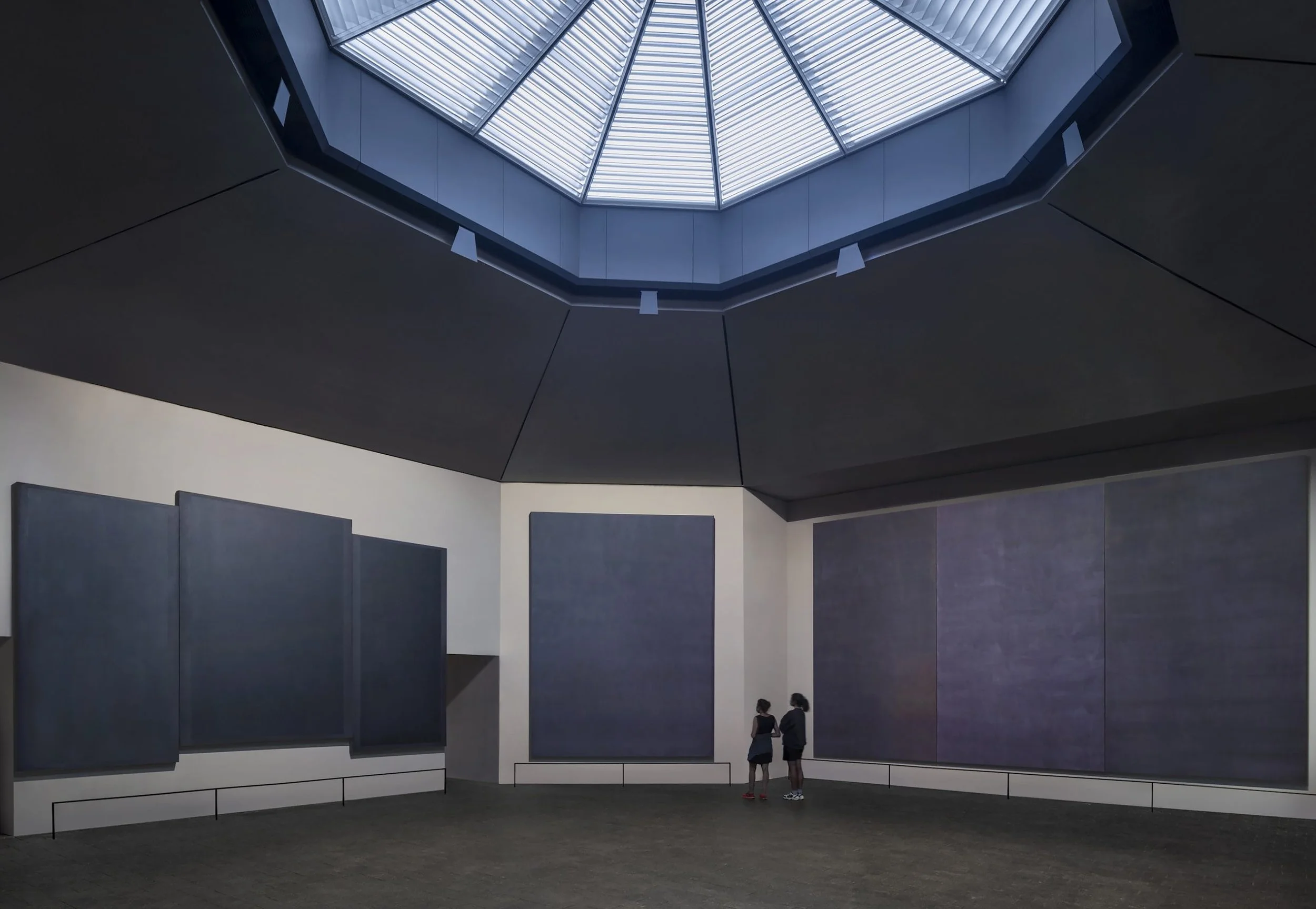
Rothko Chapel, Houston. Photo © Elizabeth Felicella
At one end of that story stands a thirteenth-century Tuscan panel made for devotion: gold ground, Virgin, Child, saints, and a painter who left his name on the object—Margarito of Arezzo made me. At another may someday stand a field of color in which the sacred figure has disappeared altogether, yet a viewer can still experience something he describes as spiritual. Across the centuries, the subject changes, the materials change, the meaning of representation changes, and the world around the painting changes. What persists is not a style but a relationship: a human being makes marks on a surface; the object survives; another human being encounters it, perhaps centuries later, and something passes between them.
We live now amid more images than any previous generation could have imagined. They can be generated in seconds, multiplied without loss, transmitted without distance, and increasingly made without a human hand touching any physical surface. That does not make painting less relevant. It makes its peculiar conditions newly visible.
Painting has transformed each time humanity has invented new ways of making images. For two centuries, the National Gallery has held a history of what painting has been. By carrying that history forward, it also holds space for what painting can become in our time.