The Underestimated Power
In Conversation with Joseph Fowler, Head of Arts & Culture at the World Economic Forum
July 2026, FT Chinese Columnist Fanyu Lin
If military power wins wars, economic power creates prosperity, and political power governs nations, why have history's greatest leaders consistently invested in art and culture?
Augustus emerged from the chaos of civil war and commissioned Virgil to write the Aeneid, recasting Rome's fractured past into a shared destiny. After the Kalinga War, Emperor Ashoka erected stone pillars across his empire whose inscriptions proclaimed compassion, religious tolerance, justice, and moral responsibility. Louis XIV transformed Versailles into a carefully orchestrated stage where architecture, painting, music, and ritual became instruments of governance. Tang China placed poetry and calligraphy at the heart of public life, projecting a cultural influence that extended across East Asia.
That historical pattern returned to me during a recent conversation with Joseph Fowler, Head of Arts & Culture at the World Economic Forum. A former professional dancer, Joseph later built a career in opera production and international cultural institutions before becoming the first person in the Forum's Arts & Culture leadership to come directly from a professional background in the arts. We were discussing artificial intelligence, cities, and the future of leadership when he suggested that culture helps shape the conditions under which societies evolve.
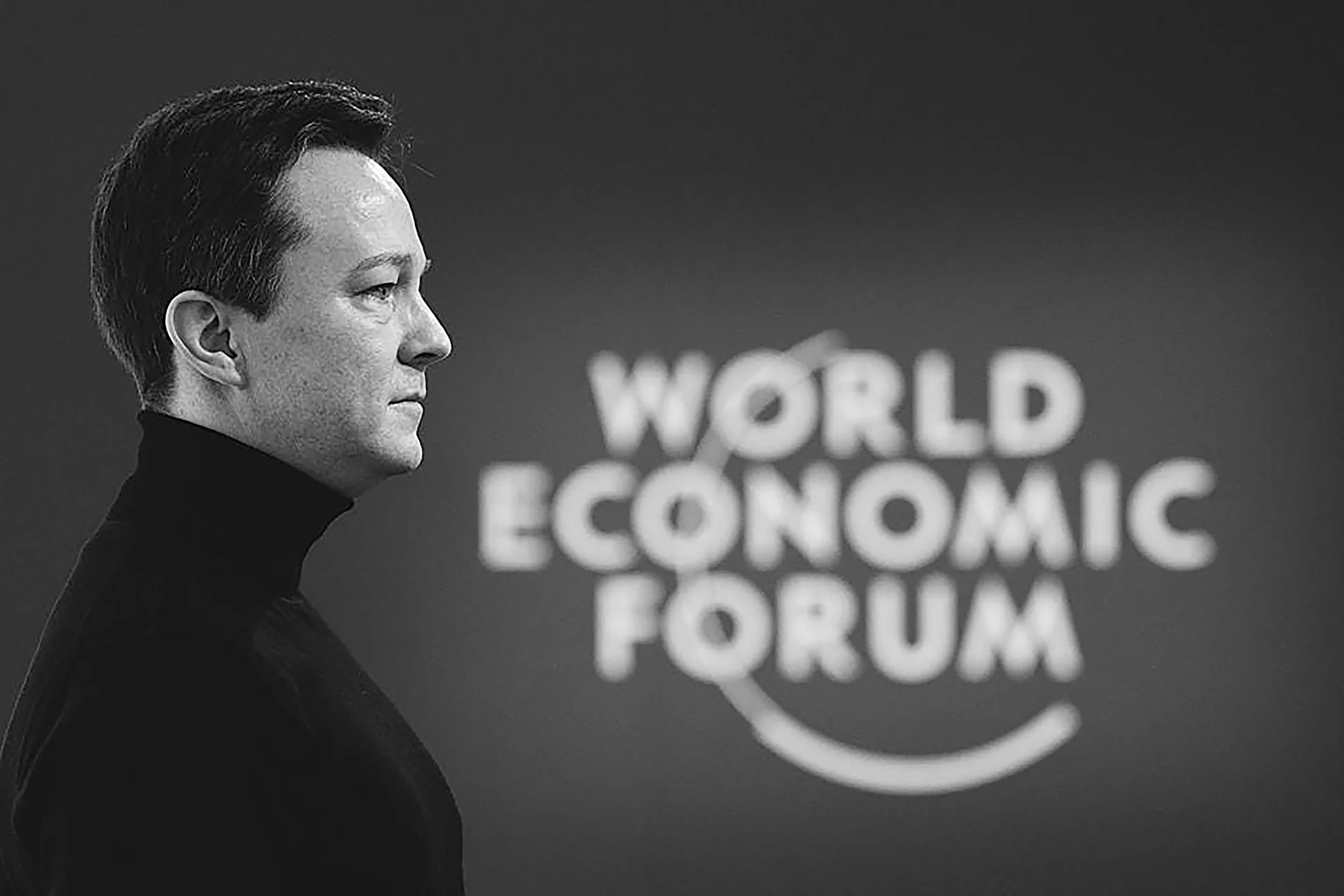
Joseph Fowler
“Arts and culture fundamentally define who we are. It's how I define who I am. It's how you define who you are. It's how I understand you, and how you understand me.
We cannot ignore the evolution of technology, and we shouldn't ignore it. We need to embrace it. But at the same time, we need to be mindful of how we embrace it, and how we protect what is sacred: what is made by the human hand, the human voice, and the human body.
When someone dances, writes, sings, paints, sketches, sculpts, throws pottery, or makes something by hand, all of that is intrinsically human. It is part of what makes us who we are. There is no machine equivalent. It can never be replaced.”
How Culture Shapes Nations
When Augustus inherited Rome after decades of civil war, rebuilding the empire required more than restoring order. An empire could be unified by military force, but no army could create a shared identity. Rome needed a story large enough to contain the future. Virgil's Aeneid linked the new empire to the Trojan hero Aeneas, giving Romans a shared origin that reached beyond the violence of recent history. Temples were restored, monuments reshaped the city, and public ritual acquired renewed significance. None of these projects increased the empire's military strength. They gave Rome a way of imagining itself.
Several centuries earlier, another emperor confronted a far more personal reckoning. Around 261 BCE, the Mauryan Empire conquered Kalinga after one of the bloodiest campaigns of the ancient world. Ancient inscriptions speak of immense suffering: countless deaths, families uprooted, entire communities devastated. For most rulers, victory would have become the defining memory of a reign.
Across the empire, stone pillars and rock edicts appeared beside roads, near cities, and along pilgrimage routes. Rather than celebrating military triumph, they spoke of compassion, justice, religious tolerance, restraint, and the responsibilities toward their people. They urged officials to govern with humanity, encouraged respect for different faiths, and even acknowledged the suffering experienced beyond the empire's borders.
History offers no shortage of rulers who reflected upon war in their later years. Ashoka made conscience part of public life. He carved those convictions into stone so that strangers would encounter those words long after he was gone. More than two thousand years later, the Lion Capital of Ashoka remains the national emblem of India. The empire itself has long disappeared.
Ashoka's pillars were an attempt to reshape the moral imagination of an empire. Leadership, in Ashoka's hands, became inseparable from the question of what values deserved to be made visible.
China arrived at a similar destination through a very different tradition. For centuries, poetry and calligraphy occupied a central place in Chinese public life. They were not simply accomplishments admired by educated elites; they formed part of the education expected of those preparing for public office. The discipline required to master the brush reflected the discipline expected of those entrusted with governing others. To cultivate character and to cultivate culture belonged to the same intellectual tradition.
That confidence reached extraordinary maturity during the Tang dynasty. Chang'an became one of the world's great cosmopolitan capitals, attracting merchants, diplomats, monks, scholars, and travelers from across Asia. Japanese missions crossed the sea repeatedly, returning with Buddhist scriptures, architecture, poetry, writing systems, court ritual, and urban planning that would shape Japanese civilization for centuries. What crossed the sea was not an army, but culture.
When Culture Crosses Borders
Culture does not remain confined within national borders. Once it enters public life, it begins to take on a life of its own, moving across languages, institutions, and borders.
As Joseph told me, “Culture creates a unique kind of space. People may not yet agree with one another, but they become willing to listen. Politics often begins with disagreement; culture often begins with shared experience.”
Perhaps this is why culture crosses borders in ways fundamentally different from politics, economics, or military power.
Few moments illustrate this more vividly than the spring of 1958. The Soviet Union created the inaugural International Tchaikovsky Competition as a demonstration of cultural confidence. It was intended to showcase Soviet cultural excellence at the height of the Cold War, when every international competition carried political meaning. Into that atmosphere walked a twenty-three-year-old American pianist named Van Cliburn.
Cliburn performed Tchaikovsky's Piano Concerto No. 1 before an audience that had grown up hearing America described as its ideological adversary. When he finished, the hall erupted into applause that continued for several minutes. According to accounts from those involved, the judges sought permission from Nikita Khrushchev before awarding first prize to an American. His reported reply has become one of the enduring stories of the Cold War.
“Is he the best?”
When the answer was yes, he replied:
“Then give him the prize.”
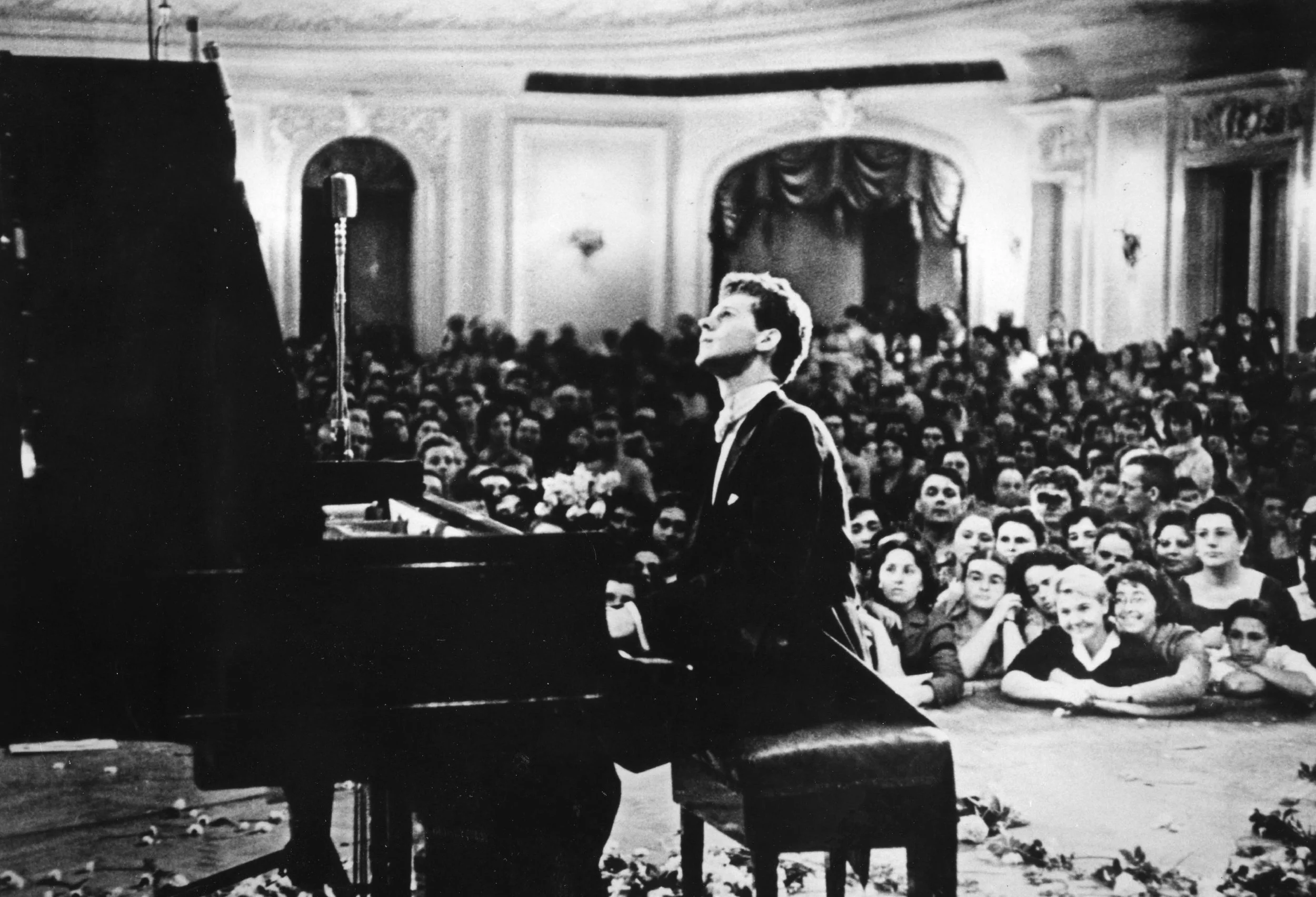
Van Cliburn performing in the Soviet Union, 1962. Four years earlier, he had won the inaugural International Tchaikovsky Competition, becoming an enduring symbol of cultural exchange during the Cold War.
The concert did not change Soviet foreign policy. It did not dismantle the Iron Curtain or reduce the nuclear threat confronting both superpowers. Yet millions remembered that evening because, for a brief moment, artistic excellence suspended political identity.
The United States arrived at a similar realization through jazz. Beginning in the mid-1950s, Louis Armstrong, Dizzy Gillespie, and Duke Ellington traveled throughout Africa, Asia, the Middle East, and Eastern Europe as unofficial ambassadors of American culture. Their tours formed part of a broader diplomatic strategy, but the musicians themselves frequently complicated the message they had been sent to deliver. They spoke candidly about racial segregation and injustice in the United States.
Rather than weakening their influence, that honesty deepened it. Audiences encountered artists who represented their country without pretending it was perfect. They demonstrated that confidence does not require the absence of self-criticism. In many places, those performances became the first direct encounter with American society beyond official rhetoric. Music created a conversation politics alone struggled to sustain.
The same dynamic appears throughout the history of visual art. When Pablo Picasso unveiled Guernica at the 1937 Paris World's Fair, the painting offered no military strategy and proposed no political solution. Instead, it transformed the bombing of a small Basque town into an image that continues to shape how successive generations imagine the suffering of civilians during war. Guernica contains no heroes, no victories, no glory. Only mothers, children, animals, and shattered human bodies. From that moment onward, civilians were no longer viewed merely as the “collateral damage” of war. They became central to its moral narrative.
Decades later, a tapestry reproduction of Guernica at United Nations Headquarters acquired an unexpected symbolism of its own when it was covered during discussions preceding the invasion of Iraq. A painting completed more than sixty years earlier had become too powerful a witness to ignore.

A tapestry reproduction of Guernica at the entrance to the United Nations Security Council Chamber.
When I asked Joseph why art is able to intervene in such complex public questions, he said, “What the World Economic Forum really does is not find answers for the world. It brings together the people who are capable of solving problems. Arts and culture do much the same. They allow us to understand a problem from an entirely different perspective. That's what makes arts and culture so powerful. It can suddenly take a conversation in a completely unexpected direction.”
He continued, “When we're talking about war, climate change, displacement and other global challenges, sometimes a problem takes an hour to explain. Other times, one image, and people immediately understand. That's where arts and culture really come in.”
Joseph believes artists are visionaries. As he put it, “Very often, when we look back through history, whether in different countries, different cities or across different regions of the world, artists are the ones who see where an era is heading before anyone else. Art reflects the age we live in, but it also projects the future, more often than not, a future we'd actually like to live in.”
When I asked him for a contemporary example, he immediately mentioned the French artist JR. What fascinates Joseph is not simply the scale of JR's work, but its ability to change perception without becoming political advocacy.
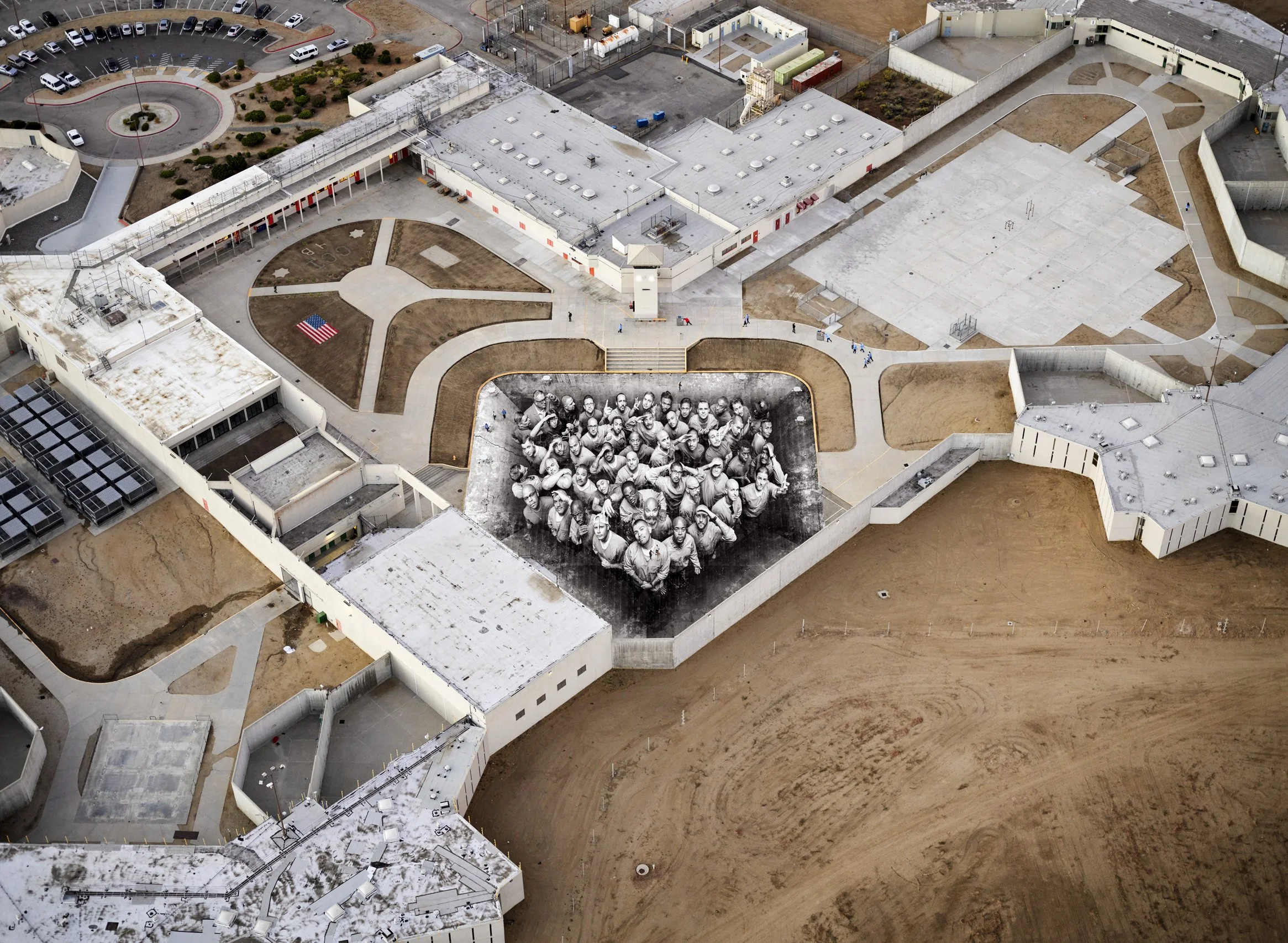
JR, Tehachapi, Tehachapi State Prison, California, United States, 2019
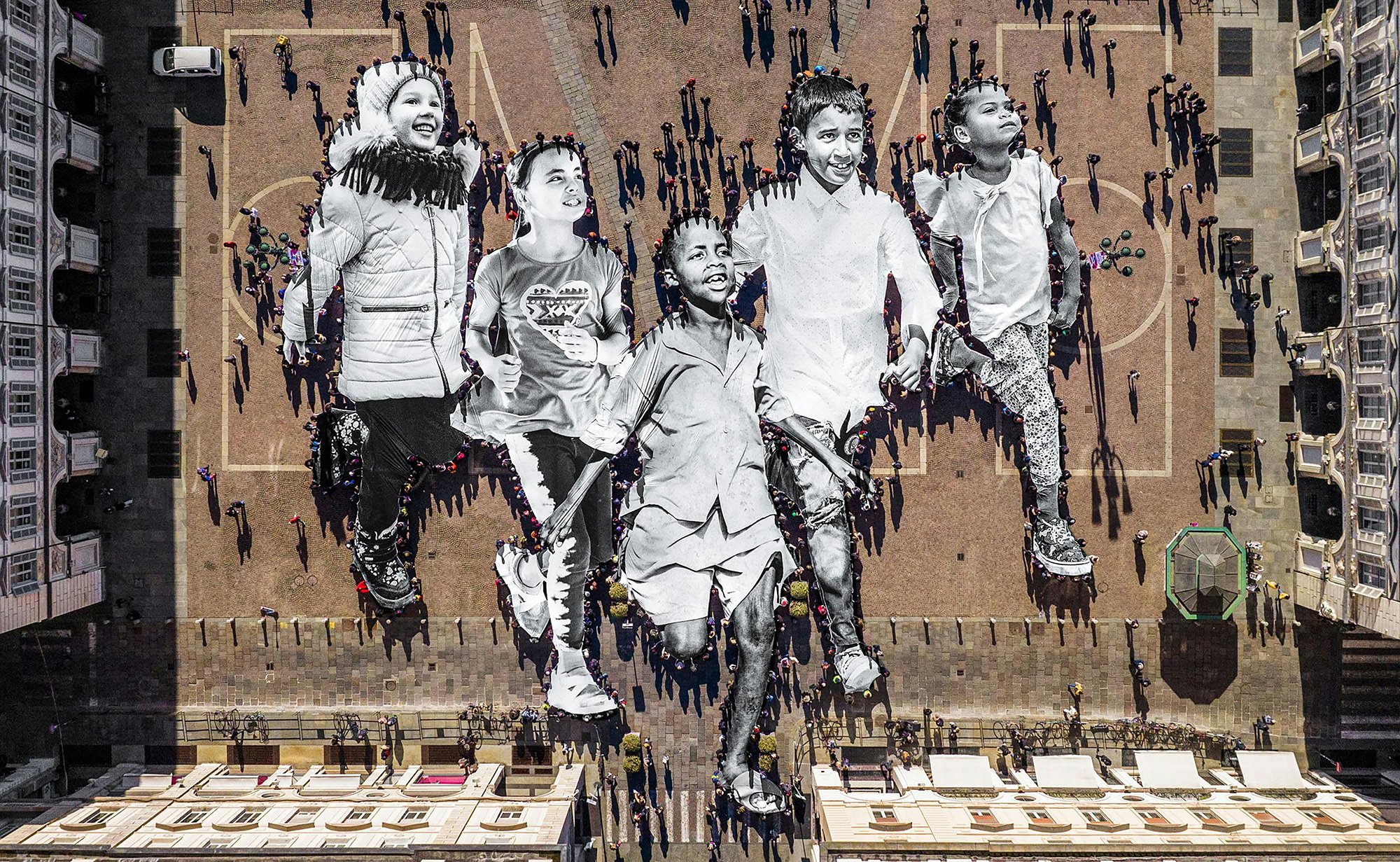
JR, Déplacé·e·s, Turin, Italy, 2023
He spoke about JR's portraits of incarcerated Americans serving life sentences, works that quietly invite viewers to question justice, sentencing, and redemption without prescribing political answers. He also discussed JR's Déplacé·e·s series, in which giant portraits of displaced children from Ukraine, Rwanda, Mauritania, Colombia, Greece and elsewhere are carried through cities by local communities. The works transform the language of forced displacement into the faces of children. Displacement was no longer an abstract idea. It once again had a human face.
The Return of Culture
Over the past few years, Joseph Fowler has been bringing artists, CEOs, policymakers, and innovators together through what he calls the Cultural Table, a dinner series built around a simple premise: creative thinking belongs in conversations traditionally dominated by business and government. For Joseph, the goal is not simply to expose business leaders to art. It is to ensure that artists become part of the conversations shaping the future.

The World Economic Forum's Cultural Table in London, May 2026
He told me that the idea grew out of Davos. Faced with executives whose schedules left little room for extended conversation, he began asking himself how artists might have enough time to engage them meaningfully, and how cultural questions could become part of discussions about organizations, business, and decision-making. His solution was remarkably simple: bring people together over a meal.
The format gradually began to change how participants thought about artists. Some business leaders started considering inviting artists into their companies to engage with employees. Others carried artists' ways of seeing back into their own professions. Joseph believes these encounters ultimately influence how organizations build their decision-making teams.
“I actually think every company should probably have an artist on their board,” he said. “In fact, I think it should become standard. If for no other reason, it's empathy. An artist will always be empathetic in some way, and empathy goes a long way.”
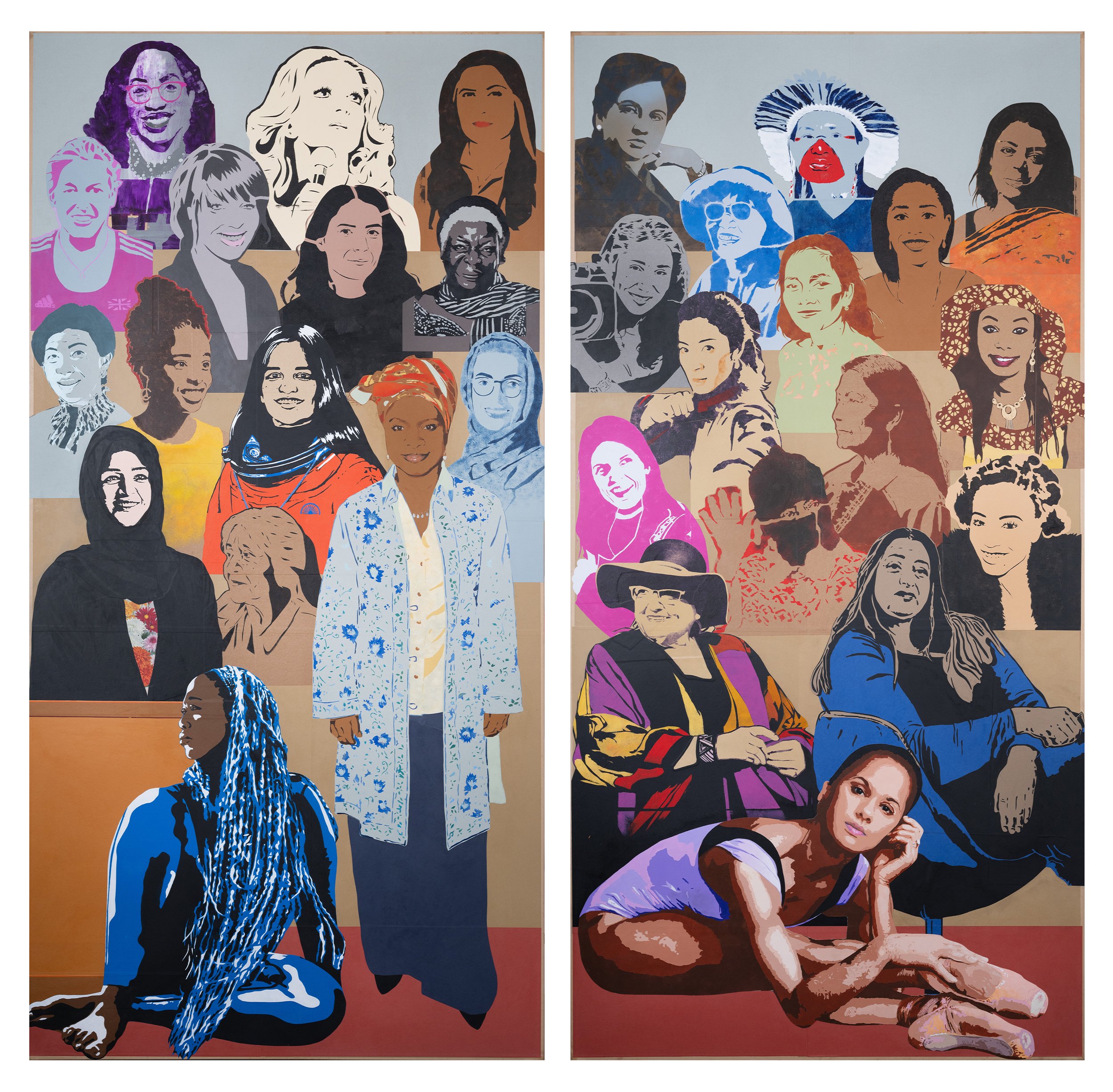
Work in Progress, commissioned artwork by Jann Haworth and Liberty Blake, featured at the Forum's Annual Meeting 2025
That realization feels particularly relevant today because many of our greatest challenges are no longer questions of capability. Artificial intelligence advances with astonishing speed. Scientific discovery continues to accelerate. Economic systems generate extraordinary wealth. The questions increasingly occupying public life concern judgment. How should these technologies be used? What deserves to be preserved? What kind of future do we hope they will help create? These questions cannot be settled by algorithms or financial models because they concern values before they concern solutions.
It may explain why artists are appearing in places where they were once considered peripheral. Many leaders seem to recognize that technical expertise, while indispensable, does not exhaust the qualities required to navigate profound change. Artists spend their lives asking different kinds of questions. They work comfortably with ambiguity. They observe patterns before they become obvious. They imagine possibilities before evidence fully arrives. Those habits of mind become increasingly valuable whenever familiar assumptions begin to fail.

Artist and Researcher Sougwen Chung at the Forum's Annual Meeting 2025
For businesses, particularly technology companies and innovation organizations, artists do not bring another form of technical expertise. They bring a different way of judging what matters. Joseph believes that the empathy, curiosity, and imagination cultivated through culture will only become more important as technological systems grow increasingly powerful. These qualities are difficult to measure, yet they shape how leaders listen, how they recognize problems before they enter the mainstream, and how they decide whether progress is truly serving humanity.
It is tempting to see the presence of arts and culture within an organization known for economics and geopolitics as an unexpected addition. History suggests otherwise. Conversations about the future have often included culture because leaders understood that the future is shaped not only by what societies build, but also by what they value, remember, and imagine together.